|
the Darkness of the Mob by Rolaant McKenzie |
|
| Formed in Toronto in 1968 and inducted into the Rock and Roll Hall of Fame in 2013, the Canadian band Rush is considered by many music critics to be one of the greatest rock bands of all time. The band was known for its highly skilled musicianship and complex and eclectic compositions, which drew primarily on science fiction, fantasy, and philosophy. Rush helped to popularize the idea of concept albums and long-form storytelling in rock music with albums such as 2112 (1976), Hemispheres (1978), and Moving Pictures (1981). Geddy Lee, the lead vocalist, bassist, and keyboardist for Rush, was born Gary Lee Weinrib on July 29, 1953, in Toronto, Ontario, Canada, to Moshe Meir Weinrib (1920-1965) and Malka Rubinstein (1925-2021), both from Poland. His parents were Jewish Holocaust survivors who survived the ghetto in Starachowice (where they met) and imprisonments at the Auschwitz, Dachau, and Bergen-Belsen concentration camps. Moshe and Malka were separated for four years when they were sent to different camps, but when Allied troops liberated the camps, Moshe searched for Malka and found her at a Bergen-Belsen displaced persons camp. There they were married and eventually emigrated to Canada. Geddy Lee's family history may have played a role in the composition of one of Rush's hit songs, "Witch Hunt," which debuted on their Moving Pictures (1981) album, and for many years has often been part of their song lineups when on concert tours all over the world. The song begins with sounds of a gathering mob being whipped into fury by a semi-distinct ominous voice calling on them to seek out the objects of their anger and kill them.
"Witch Hunt" is also reminiscent of the infamous Salem witch trials that took place between February 1692 and May 1693, where a group of young girls in Salem, Massachusetts, claiming to be attacked by the devil, accused several local women of witchcraft. A wave of hysterical accusations spread through the town. Many of the charges of witchcraft were leveled by envious poorer residents against more prosperous ones, by those who were prejudiced against certain families over property lines and grazing rights, and by those who had disputes with their neighbors over church practices and privileges. By the end of the Salem witch trials, more than 200 people were accused of witchcraft. Mobs would form at times to have the accused forcibly dragged to jail to await judicial hearings. People were found guilty in the often chaotic "kangaroo" courtroom proceedings, where due process was disregarded in favor of heavy reliance on "spectral evidence." Between 150 and 200 people were jailed, nineteen were executed by hanging, one man was tortured to death, and five others died in a disease-ridden prison. The trials came to an end when people started to doubt the veracity of the "evidence" against the accused. A few years after the trials, several of the young girls who initiated the accusations of witchcraft admitted that they had fabricated the whole thing. The coda of "Witch Hunt" provides a grim warning of how human nature can be twisted by false narratives, generating fear, envy, and hatred against groups or individuals that can, if left unabated, lead to atrocities such as the Salem witch trials or the Holocaust.
The era of the Internet and social media has enabled a high-tech version of the Salem witch trials. Out of prejudice, hate, or envy, a virtual mob can be gathered by an individual or group online to target groups or individuals for harassment and destruction of reputation that can lead to loss of the ability to make a living or even physical safety. One of the activities used to do this is called doxing, which is the act of acquiring online personal identifiable information about individuals without their consent with the intent of harassing them, jeopardizing their employment, endangering their safety, and causing their destruction. An example of this took place in the aftermath of the first-degree murder trial of Lindsay Clancy in Plymouth, Massachusetts, who with premeditation, methodically and viciously strangled to death her three children, Cora (5), Dawson (3), and Callan (8 months), on January 24, 2023. The trial began on July 20, 2026, and ended in a mistrial due to a hung jury on September 4, 2026. Eleven of the twelve jurors voted to find Clancy not guilty of criminal responsibility due to alleged postpartum psychosis, for which she was never officially diagnosed. The lone juror, later identified as Michael Desronvil, evaluated the overwhelming evidence. He concluded beyond a reasonable doubt in his mind that she was guilty and refused to bow to the peer pressure of what he described as activist jurors who, rejecting objective reality in favor of personal emotional gratification, intended from the start of deliberations to acquit Clancy in spite of the evidence. In television interviews following the trial, several of the other jurors sought to vilify Desronvil for standing up for the three murdered children and seeking justice for them. Others doxed him, gathering an online mob to harass him and threaten his job and his life. The defense attorney added to the harassment by seeking legal punishment against Desronvil for not voting to acquit his client. In a video Desronvil released to the public, he said:
The events of this trial come as a result of the growing rejection of the sanctity of human life in the state of Massachusetts. On August 10, 2026, Massachusetts became the tenth state in the U.S. to legalize the taking of a baby's life up to birth. It is possible that some whom Desronvil described as activist jurors hoped to make this trial a precedent-setting case to provide rationalizations for women who murder their children outside the womb so that they would not be held responsible. Many defend Clancy as a victim and seem to care very little, if at all, for the children she killed. Desronvil, on the other hand, is portrayed by some as a villain deserving of punishment for seeking justice for Cora, Dawson, and Callan.
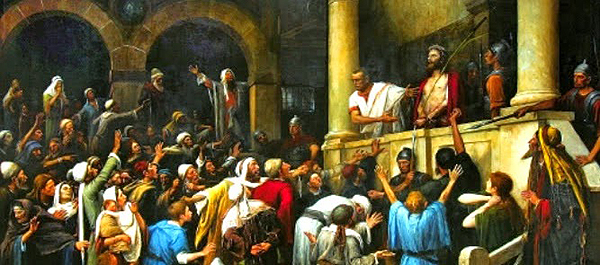
Society is on the path to destruction when it reaches the point where those who perpetrate or condone evil acts are defended, justified, rewarded, and not held responsible for their wickedness, and those standing up for what is good and righteous are vilified, harassed, and threatened with destruction. "Go touch grass" is an online culture phrase that is a call to get away from chronic involvement on the Internet, especially social media. It is a call not to become engulfed in online drama or be drawn into virtual mobs and reconnect with the real world. In addition, it is better to be immersed in the reality and truth of God's word, the Bible, and reject the failing values of a perishing society in favor of those that will endure forever. Jesus, during His earthly ministry, went through the grief of being falsely accused, maligned, despised, and condemned (Isaiah 53:3). He was the target of a "witch hunt" by the religious leaders of the day, who were envious of His influence and jealous of maintaining their positions of authority over the people of Israel. They vilified, harassed, and threatened Jesus with destruction. He was doxed and betrayed by Judas, one of His disciples, who led a mob of Roman soldiers and officers from the chief priests and elders with torches, swords, and clubs to seize and drag Him before a "kangaroo" court proceeding before the Sanhedrin at night. False witnesses were brought forward to accuse him, and Jesus was condemned. Jesus was taken before Pontius Pilate, the Roman governor, who was aware that it was out of envy that the chief priests brought this innocent man to be executed (Matthew 27:11-26; Mark 15:1-15; Luke 23:13-25). Capitalizing on the custom of the Roman authorities to release a condemned prisoner during Passover, the chief priests formed a mob before Pilate who demanded the release of a murderer named Barabbas and the crucifixion of Jesus, who had done no wrong. Seeking to avoid a riot, Pilate surrendered to the mob, had Him whipped, beaten, and tortured with a crown of thorns, before sending Him to a bloody death on the cross. But the mob and those utilizing them ultimately had no power over Jesus. They, like the rest of us, are like sheep gone astray, separated from God, and lost in our sins and iniquities (Isaiah 53:4-6). But Jesus is the Good Shepherd, who willingly laid down his life for such sheep, the righteous for the unrighteous, taking upon Himself our transgressions and iniquities. He proclaims,
Because Jesus rose from the dead on the third day after His crucifixion, His righteousness, the righteous needed to stand before God in peace, is credited to anyone who repents of their sins and believes in Him, for He "was delivered up for our trespasses and raised for our justification." (Romans 4:25) Anyone forgiven of their sins and reconciled to God through faith in Jesus Christ alone will be granted entrance into the new city in the new country, the New Jerusalem. They will partake of the fruit of the tree of life and drink of the water of life flowing from His throne (Revelation 22:1-5). There will be no need for the light of the sun or moon because the city will be illumined by the Son, the Lord Jesus Himself (Revelation 21:10-27). Those who promote witch hunts, liars, false witnesses, and mobs will no longer be able to harm anyone with their toxic tongues, keyboards, or hands anymore, because they will be kept outside the city, their darkness forever extinguished by the light of Jesus Christ (Revelation 22:14-15). | |
 |
|
| What Is the Gospel? | What Must I Do to Be Saved? | Home | Contact Us | Return | |